Showing posts with label Bread. Show all posts

Thursday, April 9, 2020

C-19 and comfort

This entire covid-19 stuff is crazy. And my kids are done with it, they want it gone. So our family is joining in the World Wide Good Friday Fast April 10.  To start our fast, we will start after dinner Thursday night, and it will go through until Friday evening.

Going a bit stir crazy, we were so happy to have nice warm weather yesterday and today. We all got a little sun burn, but we got to be outside in our yard. We played, we weeded, we checked trees for winter damage (I think I lost two trees, makes me sad) and we made a yummy dinner.

Comfort food is what is needed right now. And I am so thankful I made some sourdough starter back in February, because we have been using it. I have worked hard to figure out how to make this yummy.
1. Let your sourdough bread dough ferment in the fridge, this helps it to rise slowly, but also helps it to work better.
2. When it is time to put it into the oven, slash your dough! Extremely sharp thin knife or with a razor blade slash the dough about 1/4-inch deep. This helps with oven spring, or letting it rise correctly.
3. Mist your dough with water after slashing, but right before putting into your dutch-oven. Weather your dutch oven is piping hot from the oven or room temperature, mist it before putting into the pan.
4. Cook with the lid on for the first 15 to 20 minutes. Then remove the lid. Again, this helps with oven spring (rising in the oven). The texture of the crust is amazing if you do this too. My little guy prefers the crust this way.


Another comfort food it just food  our family normally eats. We love fresh salad, but unfortunately I am not going to go to the store for a long while, and my garden is not ready to grow anything yet. I love soups, casseroles, smoking fish and other meats, bbq, and just yummy food. Yesterday for dinner I had to make some major comfort food. All the kids were losing it, the youngest feeling like everyone doesn't like him because he can't play with friends. We went for a bike ride, waved to neighbors, and then we made dinner together.

What did we make?  Chicken Coconut Curry and it was AMAZING! Everyone went back for seconds, except the littlest one because he never goes back for seconds so we have learned to give him a large serving and not expect him to eat all of it.

Only one serving left in the crock pot.
This is one of those recipes that you can make as spicy as you like using sriracha sauce. We do not use the cilantro because there is someone that is extremely sensitive to it in our house. But honestly it is wonderful to add during serving, it adds a freshness. I just squeeze the lime into the pot just before serving. Not a lot of the juice, just a little.

We usually serve this over jasmine rice, but because of the run on rice at the store, I had to use what I had at home, which was just long grain rice. It worked. It was delicious. Below you see my second bowl of curry. I only add enough sriracha to give this a little heat, not so it covers up the flavor of the meal. I asked my kids to explain this dish. Tell me how it tastes, and they all just said super yummy and that they didn't know what it was but it just made them feel calm.

This is the real meaning of comfort food. It brought them calm, it made them happy.

Another comfort food I have not had in years, Libby Chicken Noodle Dinner. I used to love that for dinner. But it is no longer available. This to me is also comfort food. I wish it would come back. I can't even find a picture of it on the internet to show you. So sad, that was a yummy meal in a can. Great to have in your food storage.

What else comforts you? For me, it's rocking with my little one in our favorite rocking chair. Getting hugs. Snuggling my dogs. Sitting in the sunshine. Being with my family.

How about you?

Sunday, March 29, 2020

Dinner was ready....

Well in my head anyways. We were supposed to be having guests for dinner, but with all this shelter in place stuff going on, our guests had to cancel. And of course I wasn't told until AFTER I started making dinner because hubby forgot to tell me they weren't coming.
No problem, just put the extras in the freezer right? Except my freezers are FULL. I just got my meat order from the farm, and there isn't any room!
Homemade Buns
First we made buns for our dinner. But after I mixed it, I was confused as to why it didn't smell right.  Then I felt the dough.. Oh crud, I forgot the yeast!  UGH. I had doubled this recipe and my mixer was getting full. So to remedy the problem, I added the yeast for 3 batches, the ingredients to make it a total of a triple batch. This got a little messy. BUT, it worked, and the buns were amazing. So amazing in fact that my hubby requested I make more to live in our freezer. He said they were light, and yummy.  And would be good for sub sandwiches.

While the dough was rising, I ran an errand. When we got back the dough was crawling out of the bowl, I forgot I would need it to rise in a larger bowl because I tripled it. No problem, it was not over proofed, thank goodness. After I got the dough cut and shaped and onto the pans to rise. I made the next ingredient for dinner.

Meatballs!  I really like my meatball recipe. My oldest ate an entire pan himself  once(24 meatballs)!  Glad I made 6 pounds!  Whew, he loved them, but he always has liked my cooking. He is my best eater, always has been.

These are also pretty easy. I will put the recipe at the end. These are tender, and can be made gluten free, and they are dairy free.
 Want to know the best way to doctor up a store bought spaghetti sauce? Add a little pesto. I know it sounds weird, but it works and it just makes it a little bit more special. So after I baked the meatballs, I put them into some hot spaghetti sauce and kept them warm until my buns were cool enough to do assembly.
 What is this? Egg salad? Potato Salad?

NOPE, this is the special cheese mix that makes this dinner creamy goodness! Now my little guy is allergic to dairy, so his is made without the cheese mix in it. BUT he loves this dinner, he scarfed it right down.

Here they are! All assembled. It is like a meatball sandwich. Whenever we are having new missionaries over for dinner, our kids request we make this for them. Sometimes it is with meatballs, and sometimes it is just the meat browned and added to the sauce. Either way it is delicious and I know my kids will eat it. 

This is just for pure temptation. Look at the cheesy goodness, look at the fresh bun, the moist meatballs. Oh my foodgasm!  Sorry couldn't help it. No leftovers tonight. I feel bad we couldn't take any to the missionaries (our guests that couldn't come), their mission president said not to accept any meals. We have to keep them safe and healthy. But hopefully we can serve them soon.

My kids say this meal is comfort food.

I hope you like it too.

Now for recipes. I will share the meatball recipe here. I will to the buns recipe another day.

MEATBALLS
  • 2 # italian sausage, bulk
  • 1 1/2 # ground turkey 85/15
  • 3 eggs. beaten lightly
  • 2 palmfuls Italian Seasoning
  • 3 pinches kosher salt
  • ground black pepper
  • 1 cup gluten free oatmeal (or quick)*
  • 1 cup gluten free oatmeal soaked in cold water for 3 minutes (or quick), drained *
Preheat oven to 350 degrees.
Combine all ingredients with hands in large bowl.
Make 1-inch balls and place on baking sheet or on cast iron pans. Bake 15 - 25 minutes or until done. DO NOT OVER COOK.
*I use gluten free oatmeal, it is usually quick cooking. You can use normal quick cooking oatmeal. Regular oats tend to give a different texture, so we use the quick oats.

We use these meatballs for spaghetti and sandwiches, or plain. They are delicious.

Cheesy Mix  
  • 1 cup cottage cheese
  • 1 cup shredded cheddar*
  • 1 cup mozzarella *
In a food processor, blitz the cottage cheese until it is about the consistency of ricotta. Stir into the shredded cheese.

SAMMY
Put meatballs into your favorite spaghetti sauce. Open buns, but do not pull apart the halves completely. Slather some cheesy mix onto both sides. Next put a few saucy meatballs into the bun. Place in oven proof dish. When pan is full, cover with foil and bake sandwiches about 20 minutes or until every thing is heated through.
Serve with salad or fruit or both.

Do you have yeast?

I had an entire post written up, but it was too. aarghhh. I am so sick of hearing about the virus, I am tired of hearing people argue if it is or isn't as bad as influenza. Nobody can seem to talk about anything else.

So my question was. Do you have yeast? Um.. what do you mean? I mean, if you can't get bread at the grocery, you have to make it; and you need yeast to make bread. So do you have yeast? What kind?  There's a couple to choose from: commercial yeast (Red Star, Fleichman's, SAF) and sour dough starter.
Commercial Yeast
 Each one gives you the same general result.  A loaf of bread. Usually the commercial yeasts will almost always give you a great rise, fine crumb, and a way to make a sandwich. BUT if it is too old, or has not been stored correctly then it's not so good. Nobody likes ending up with a brick after using 3 to 15 cups of flour, plus sugar, fat, and the precious yeast to find out that it didn't work.

Commercial yeast is finicky. Store it too hot and it dies. Store it in the freezer and it lives. Make your bread with too hot of water or milk, kill your yeast. Use warm to cool water, yeast is happy. Too much salt will retard (prevent yeast from growing), too little and the yeast will over proof (rise) and your bread will be loose and crumbly.
Sour Dough
Sour Dough is what some of us bakers call perpetual yeast. It is easy to make, and you don't have to buy it. Yes you can find sour dough starters on ebay and etsy, craiglist and most likely facebook too. You can also make it yourself.
It can be finicky like commercial yeast, but once you have it going, it is a powerhouse. Again, you have to treat it right.
About day 7
I started this sour dough starter in February. I all of a sudden decided I needed a new challenge. I guess dealing with my second kid getting married and kiddos #4 & #5 saying they are getting married this year too! Dealing with health issues (don't go down the three steps in the garage incorrectly!) and trying to make sure everyone is getting the love and attention they need and want. Plus working on a quilt, and just feeling overwhelmed. So yes, let's start a new challenge!

No pressure. So I follow The Prairie Homesteader, and so I learned from her. I have made starter before, but that was before .. That was before our new normal.  So I needed a refresher course.  I followed her directions and made my starter. As you can see, it came out great.


I forgot to take pictures of each day, but if you look closely at the picture you can see tiny bubbles. It took about 7 days, and I made some yummy sour dough pancakes. I waited until day 14 until I attempted my first sour dough loaf. It .. worked.. but it was pale, and bland, and heavy and tight crumb. Nothing like I was expecting. I wanted big holes, I wanted it to be crispy on the outside and fluffy yummy on the inside. It was not. So I kept feeding my starter and using the discard for muffins and pancakes.
About day 14
I patiently kept feeding it and using the discard, giving discard away to a good friend. And now look at it. Look at those amazing bubbles. I found a recipe for sourdough bread. It is more labor intensive, it is worth it though. I also was educated by
amyinthekitchen.com about why my first attempt didn't work. I didn't do a float test. You can find this information on the website, and it isalso where I found the recipes I am working with right now to make sour dough bread. I already have a sour dough pancake recipe I like.

 And finding the recipe I liked a lot was on her other page, Little Spoon Farm. 
I tried making her recipe for "Beginner's Sour Dough Bread", and let me tell you.. It is yummy. It was more work than I was expecting, but it is worth it.
This picture of that recipe; it makes two LARGE loaves, and I think if I make that one again I will cut the dough into fourths, not just in half. Because the loaves were so big that it is too wide to cut easily. Yes I can remedy this by cutting across the loaf, and then putting the cut edge down and make half slices, but I didn't want to do that.
These loaves are BEAUTIFUL! And I made them!
 Isn't it pretty? Look how wide it is!  It is 8 inches, or a little more wide! This one I did the classic triple slash with the razor blade.

I will warn you, you need a brand new razor blade, the kind you put in a box knife, to make the slashes in the dough. I tried with a sharp kitchen knife and it just didn't slice through as good as a thin razor blade. I may even try using one of those double edge razors you get for old Gillette razors.
 This one with the weird face, I tried to get fancy with the razor blade, and when it was done baking, it looked a lot different! But wow did scoring the loaves with the razor blade help it rise better. I know it doesn't make sense, but it works. MY little one said the wavy slash was a snake, what you can't see is on the one end of that slash is looks like a little forked tongue coming out.


 Now look at how tall they are! 4 inches!  Holy cow!  And they are a little different in height because I used different size bowls to proof them in. They weighed exactly the same.


This bread is delicious. It does not have a strong sour dough flavor, which is good because two of my kids do not like the taste, but they are getting better with it. I am educating their palates.

I am so thankful for these two ladies who helped me to grow. I love learning, I love cooking, I love baking. I just hate cleaning up (just being honest). I am currently working on another recipe from Little Spoon Farm, her Sourdough Country Loaf Bread. This recipe only makes one loaf, but it was so easy now that I understand what I am doing, and so quick for me. The beginner's loaf seemed hard at first because it was the first time I was making the recipe. But next time I make the beginner's bread recipe I will cut it into four, and give it away along with some starter and the website so they can start this amazing journey.   

Thursday, December 5, 2019

Gluten Free Tattie Scones

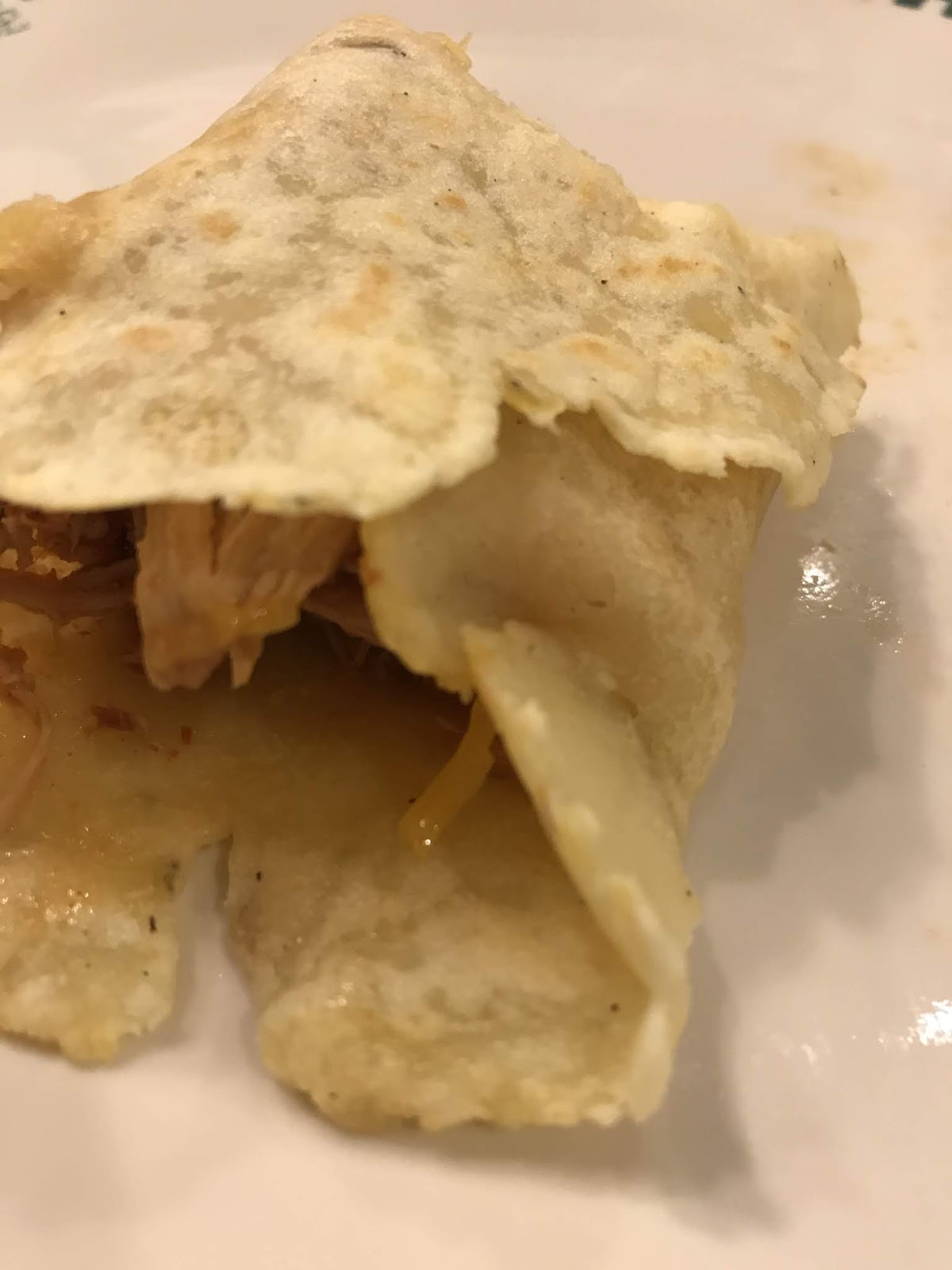
Have you ever heard of a Scottish Tattie Scone?  It's kind of like a thick tortilla, or thin naan. To me they are comfort food. Great with mash and meat, soup, or used as a wrap type sandwich. I love naan, but these are faster and just as yummy.
This one is fresh off the pan. I then stuffed it with rice (on the plate), cheese and shredded chicken. This can be rolled burrito style, but not too tight or it will rip.

I do not like GF tortillas you find in the store. I think they are made by mission. I have tried both the white ones and the green ones. Both were sticky, gummy, pastie and flavorless; not to mention EXPENSIVE!

I have had the Scottish Tattie Scone recipe forever, but I have only made them once since we moved 2 years ago. Why? I forgot about it. But we used it with a soup the other night. But tonight  I had the chicken in my crock-pot and everyone else could use a flour tortilla, so I decided to try to make a GF tattie scone and see if it would work. Not only does it work, but it tastes AMAZING.
I almost ate the entire thing before remembering I wanted a picture! So yummy I made more, and yup they are already gone. This recipe is very easy, can be dairy free (DF), corn free (CF), soy free (SF) and of course gluten free (GF). I will admit, mine were not DF. But they could have been.

So I used leftover mash to make these, and DS2 made the mash so there was butter, parmesan, garlic and half and half in them. Which, by the way, were amazing yummy spuds. Rules with GF flour, it has to be cooked through, for some reason. It may seem this dough is too dry, but honestly it all mixes in, and makes a wonderful dough.

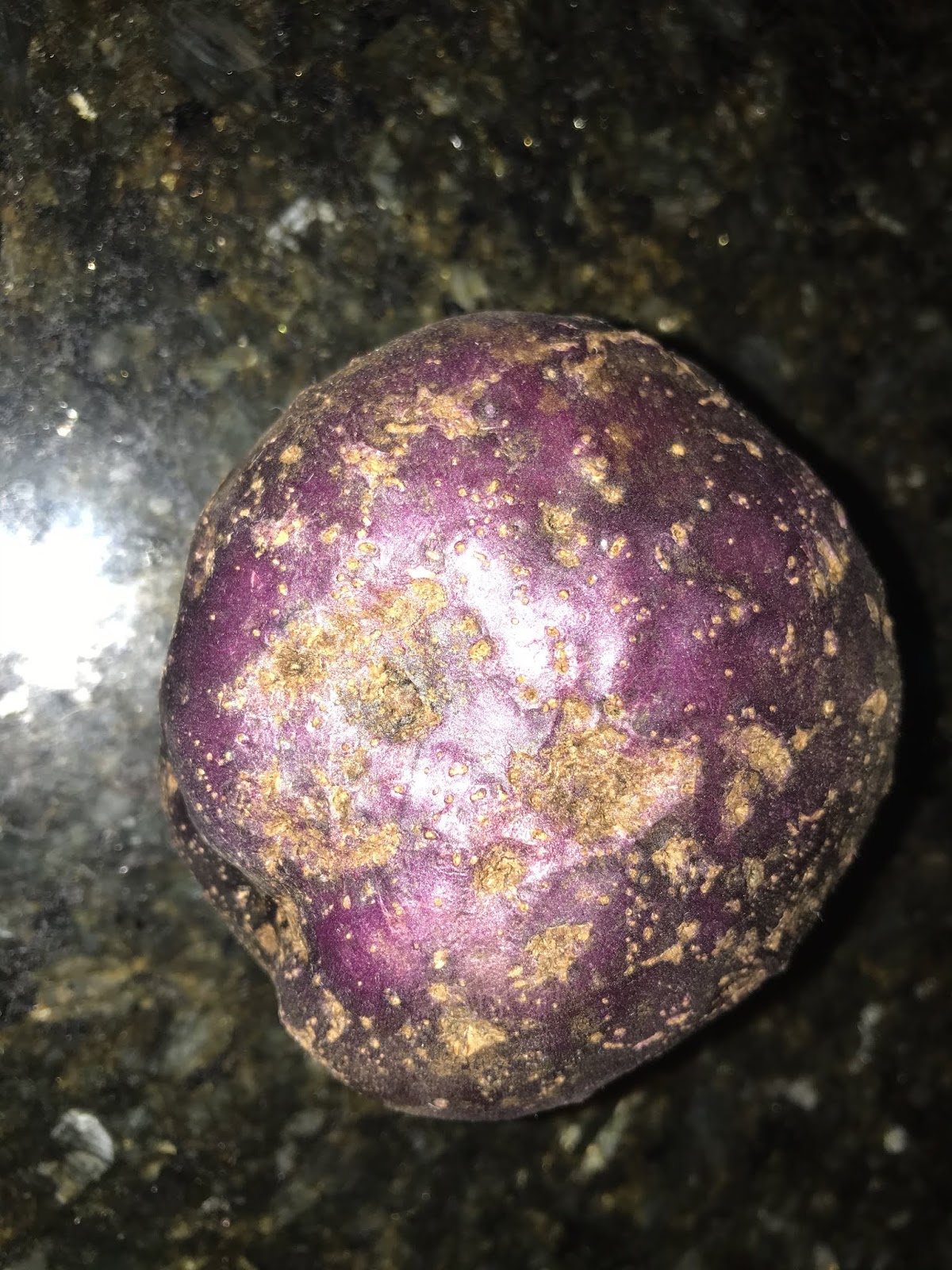
The spuds we used are called Huckleberry Golds, and they are one of the ugliest potatoes I have ever seen. Purple skin, that is kind of warty, with beautiful golden flesh.

They are very dense and delicious.

I took two pictures, one with and one without the flash. The purple is very vibrant in the sunlight. The interior flesh is a wonderful yellow gold.

I used Mom's Place GF flour blend (locally made) , link is in the name. I love Mom's Place, so far theirs is the only gf blend I like.
Ok so would you like to try them? These are yum! I love them. My kids like them too.


Scottish Tattie Scones
Half pound boiled mashed potatoes (King Edwards if you can get them)
2.5 oz (65 g) all-purpose flour (wheat OR GLUTEN FREE)
1 oz (25 g) butter (OR coconut oil, olive oil, ghee, etc)
pinch of salt
pinch of pepper
1/4 tsp baking powder

Boils spuds in salted water until tender. Drain, mash with butter, S & P, and baking powder.*
Mix in flour to make stiff dough (exact amount depends on type of potatoes used).

Roll out on floured surface to 5 - 6 mm thick. Cut into rounds, use a saucer or small tea plate as a guide. Prick all over with fork and score dough to mark 4 equal wedges. Cook in lightly greased heavy pan or griddle over medium heat. About 3 minutes per side or until golden brown.**

*OR use leftover mash potatoes, add S & P, baking powder and flour, mix until stiff dough.

**Divide into 4 pieces, and roll into a ball. Then take a ziplock gallon bag and cut the sides open. Place ball in center of one side, put other side on top and use a heavy pan to flatten ball. If that is not enough then gently roll out to 4 to 6mm thick.
When making GF, I roll these out to 3mm thick, but you could go thicker, they will take longer to cook. I do NOT prick with a fork all over, because they are very thin, and I cook them like a tortilla.

 Cooking the first side, I also turned it around a little as my pan wasn't quite hot everywhere yet. Half of it was cooked so I turned it clockwise to get the other side done.
 Then I flipped it. and the smells.. made my mouth water. Using garlic mash is amazing for these.


 Well stuff with chicken, rice and cheese. And it was worth the 5 minute wait while I got the pan heating up, mixed the dough, rolled it out and cooked it. FAST AND EASY AND so worth it. NOT gummy, NOT sticky, NOT hard to make. This is one that will be made often as a bread for me.


Tuesday, March 26, 2019

What to do today? Grind up some flour!

So I went to make some rolls for the family, and discovered I was out of flour. No worries, I usually grind my own grains to make my flour. So today I combined white hard wheat, kamut and barley. What grain mill am I using today? My FGM, aka Family Grain Mill. I got it from Pleasant Hill Grains, and it comes with some very neat attachments, but right now, I am making flour, so using the normal head.
 Because kamut is such a large grain, I decided to crack everything first.


After this I dial the setting to finest, and grind away.
As you can see this grinder is not as loud as my kitchen tec, and so I let the little one help me.
 
Next I will be putting this through my sieve and then grinding the germ again. Anything too big will be tossed to the worm bin, because those sharp edges break my gluten strands when making bread.


Saturday, December 15, 2018

Chicken Stock

It was so nice the other day, after putting in a bunch of hours, and my sick kid feeling better, to have a nice sit down dinner with the family. We roasted a chicken, made some mash and gravy. It was delicious. After dinner, we took all the bones, put them in the crock pot and made bone broth.

For this wonderful bone broth it contained bones from one chicken, plus any dripping in the pan, any skin not eaten, bay leaf, some chopped carrot, chopped onion, chopped celery and some garlic. Along with a tablespoon of salt and then covered it all with water. Cooked this on low for 48 hours because I accidentally forgot about it. This happens when you have a kiddo that had a nasty virus, and the night we had our chicken dinner was the first day she was feeling better, and I took a few days to recuperate from lack of sleep.

Sometime during the last 2 weeks, my teenager decided he wanted to learn to make bread. He did great! The first time he made garlic mash bread. The second time just potato bread. Both times, all the rolls and loaves of bread came out beautifully!

And yes, these are made from a gluten dough. Yes these were FABULOUS!!! The smells were divine! So each time he made bread, it was a 6 loaf recipe, so about 9 pounds of dough. Great Grandpa and I are so proud of him. Great Grandpa was a master baker, and I am so thankful he taught me his skills before passing. Although we didn't use Great Grandpa's recipe (100 pounds of flour, 20 pounds of this.... 10 pounds of that.. I don't have that big of a mixer ).  For my little mixer, this was great. Some day  I might have the mixer of my dreams, a 60-quart Hobart, but for now my little Bosch will have to do.


Thursday, February 12, 2015

Amazing little GF muffins

I accidently found this recipe this morning. I now have so many food restrictions that it is getting more difficult to find fun things to eat. this little gem is flour free! Can be made sugar free! The texture is like a light fluffy muffin! Love it. Unfortunately this is not a nut free recipe. But there are so many options out there for nut and seed butters. No, you may not use cow butter or ghee. Sorry.

I found this amazing recipe over at Whole Lifestyle Nutrition. A great site for those looking for better options. I will post the recipe as is posted on the site, then put in my changes at the end. I highly recommend you visit the site, lots of great stuff over there.


Prep Time: 5 minutes
Cook Time: 15 minutes
Yield: 12 muffins or 24 mini muffins
Serving Size: 1 regular muffin or 2 mini muffins
Recipe adapted from The Sweet Spot
Ingredients
  • 1 cup nut butter - you can buy nut butters here
  • 2 medium sized bananas (The more ripe, the sweeter!)
  • 2 large eggs 
  • 1 teaspoon vanilla (try making your own!)
  • 2 tablespoons of raw honey(or other sweeteners such as maple syrup, stevia, etc.)
  • ½ teaspoon baking soda
  • 1 teaspoon apple cider vinegar
  • Toppings: dehydrated unsweetened coconut flakes, raisins, flaxseed, dark chocolate chips, cinnamon, and/or anything else you can think of. I added even more tupelo honey ;) Feel free to lather on apple butter, strawberry preserves, or even more peanut butter. Ever heard of carrot jam? It's very tasty with this snack, too!
Instructions
  1. Preheat oven to 400 degrees F.
  2. Place all ingredients into a blender or food processor. You can also use a stick blender if you have one.
  3. Blend until well mixed.
  4. Pour batter into a greased muffin tin. You can also use a mini muffin tin to make 24 mini muffins.
  5. Add additional toppings of your choice to each muffin and lightly stir into each cup
  6. Cook time: 15 minutes for full size muffins and 10 minutes for mini muffins.
  7. Reheat in a toaster oven for about 4 minutes at 350 degrees F, or eat at room temperature.
Notes: I first made this in a half batch. I used half almond and have peanut butter. I used 1 1/2 TBS RAW honey, and I added 1/4 cup mini gf chocolate chips. I also used my stick blender to blend them.

What I would do next time: use a riper banana (mostly brown almost black), only use peanut butter. Taste the batter and check for sweetness.. maybe use a little more honey, but using a riper banana will help with sweetness as well.

The texture was NOT rubbery, was NOT dense, WAS light and fluffy, like a normal muffin.

This one is being printed and being put into my GF recipe file.

Definetly also check out Averie Cooks  These little GF puffs look very promising, although not dairy free, I am wondering if they can be made with a dairy free alternative. Like dairy free sour cream (for those who are DF). 
 

Wednesday, July 23, 2014

Gluten Free Pizza Dough

Oh my goodness!! Trying to find a decent GF pizza dough that isn't full of corn or soy flour is ridiculous! Peaches and I have tried so many different kinds that I think we are sick of pizza right now.. BUT, I just happened to make one up the other day.. and it was pretty good! So good that she took some dough to a mutual event where they were making pizzas so that the other GF people could have some pizza too. AND THEY LIKED IT!!!!!

It's so simple it's crazy! I roll my dough out thin between pieces of parchment paper.

GF Pizza Dough

2 1/2 cups flour *
1 tsp instant yeast
1 tsp salt
1 TBS + 2 tsp olive oil
1 cup + 1 TBS warm water

Put oil in measuring cup first!! Then add enough warm water to equal 1 cup + 1 TBS total liquid.

Combine dry ingredients. Add water mix. Stir well to combine all. Cover and let rest in warm spot for 2 hours. Then refrigerate at least 3 hours.

When you are ready to make your pizza, use a little flour on top and cut dough  in half. Place dough on flour dusted parchment paper. Cover with another piece of parchment. Roll out thin, I usually roll it out to 1/8-inch thickness, but Peaches rolled hers out to 1/4 inch at mutual and said it was cooked through. 
Heat oven to 450 - 500 degrees with cast iron pan in oven. After topping dough with sauce etc.. place on HOT cast iron pan and bake for 8 - 12 minutes or until desired doneness..

* I mixed up flour: 1 cup white rice flour, 1/2 cup millet flour, 1/2 cup potato starch, 1/2 cup tapioca starch and 1/4 tsp. xanthum gum

**NEVER eat raw GF dough. Not sure why, but that is a warning label on most GF flours.

Friday, March 29, 2013

GF MINI LOAF

I found this by chance. It was supposed to be cooked in microwave, but since I don't believe in microwaves being safe, we bake it. And it works out great!  YOU need to use the GF flour mix recipe I have on the site, as it has the baking powder in it.

GF Mini Loaf

1 egg or 1 TBS flax meal AND 3 TBS water
3 TBS buttermilk*
1/3 cup gluten free flour mix
1 tsp. honey or sugar or agave

Combine wet ingredients first, then dry. Stir well. Pour into small loaf pan (SMALL, like one from a kids baking set). Bake at 375 for 20 minutes in the MIDDLE of the oven.

*you can use dairy free milk. Just add a tsp. of lemon juice or vinegar to make it "buttermilk" to make a total of 3 TBS of "buttermilk".

Depending on your flours, and liquids, and weather, the middle can sometimes be sticky, but we like the ease of this recipe, quickness of it, and the flavor can always be changed by adding dry herbs.

Tuesday, July 3, 2012

"McDonalds" Pancakes

Me: "Good Morning, what would you like for breakfast today?"
The Brood: "Pancakes"
Me: "What kind of pancakes would you like?"
The Brood: "McDonald's Pancakes"

McDonalds pancakes.. easy. Now I don't make these like the restaurant. I don't use preservatives, weird oils, and "white" flour. Originally I made these using a few tablespoons of cannery vanilla pudding, but since I am out of that, I just add some vanilla.

Now mind you, I don't use store bought flours. I know, I am weird. I make my own all-purpose flour. Yes I grind the grains myself. Remember you can use beans for oil, which I did today! The kids didn't notice a difference either. Give this recipe a try.

Our version of McDonalds Pancakes:

1 egg
2 TBS oil, or bean puree
3/4 cup sour milk (usually reconstituted powdered milk, and I put 2 tsp lemon juice in it)
1 tsp. vanilla
1 cup all-purpose flour
1 TBS sugar
1TBS baking powder
1/4 tsp salt
1 handful of oatmeal

Mix it all up and cook it on a hot griddle. Now for our family I did multiply this by 4. IF any leftover batter, then I store it in a jar in the fridge. Usually someone wants pancakes when everyone else is having eggs.


Wednesday, March 28, 2012

Pumpkin Chocolate Chip Muffins

Recently my cousin was diagnosed with Celiacs. My daughter and I have been gluten free for about 6 or more weeks now. I know how hard it is eating gluten free  because we have also been  corn free for 9 or 10 years. So here is our favorite recipe so far, on the gluten free trail. This is one of our favorite recipes that I adapted to GF. ALSO, we usually use half of the chocolate chips called for. These freeze great!


Pumpkin Chocolate Chip Muffins (Gluten Free)
1/3 cup oil or melted butter
1 cup brown sugar packed
2 eggs**
1 cup pumpkin
1 cup any combination of white rice flour, tapioca flour, potato starch, sorghum flour or bean flour
2/3 cup any combo of brown rice flour, almond flour, coconut flour, millet flour, buckwheat flour
1 tsp salt
1 tsp xanthum gum or guar gum (ONLY if making GF)
1/2 tsp cloves
1 tsp cinnamon
1/2 tsp baking powder
1 tsp baking soda
1 cup chocolate chips

Bake in lined muffin tins at 400 degrees for 10 to 20 minutes or until done, depending on your altitude and oven.

This recipe easily doubles, triples and quadruples!! Below are measurements for a large can of pumpkin :)

1 1/3 cups oil or melted butter
4 cups brown sugar packed
8 eggs**
1 large can of canned pumpkin or 4 cups
4 cups of fine flour (allpurpose OR combo of rice, tapioca, potato starch)
2 2/3 cups heavy flour (whole wheat OR combo of brown rice, coconut, almond, bean, millet)
4 tsp salt
4 tsp xanthum gum or guar gum (ONLY if making GF)
2 tsp cloves
4 tsp cinnamon
2 tsp baking powder
4 teaspoon baking soda
4 cups chocolate chips

Bake in lined muffin tins at 400 degrees for 10 to 20 minutes or until done. Depends on oven and altitude.

**YES, you can use egg replacer. YES  you can use 1 TBS flax seed oil soaked in 1/4 cup warm water for a few minutes in place of eggs, works great!

Saturday, October 22, 2011

What's in your bread??

I have been making bread for our family for over 10 years now. I love it and so does my family. What do I not use in my bread? Dough enhancers. I have never found a need to, and my tummy totally agrees with me. I found an article today about dough enhancers that solidifies my way of trying to cook with out chemicals, and things I can not pronounce. Here is a copy of the article:

True fact: A common ingredient in commercial breads is derived from human hair harvested in China 

"(NaturalNews) If you read the ingredients label on a loaf of bread, you will usually find an ingredient listed there as L-cysteine. This is a non-essential amino acid added to many baked goods as a dough conditioner in order to speed industrial processing. It's usually not added directly to flour intended for home use, but you'll find it throughout commercial breads such as pizza dough, bread rolls and pastries.

While some L-cysteine is directly synthesized in laboratories, most of it is extracted from a cheap and abundant natural protein source: human hair. The hair is dissolved in acid and L-cysteine is isolated through a chemical process, then packaged and shipped off to commercial bread producers. Besides human hair, other sources of L-cysteine include chicken feathers, duck feathers, cow horns and petroleum byproducts.
Most of the hair used to make L-cysteine is gathered from the floors of barbershops and hair salons in China, by the way.
While the thought of eating dissolved hair might make some people uneasy, most Western consumers ultimately have no principled objections doing so. For Jews and Muslims, however, hair-derived L-cysteine poses significant problems. Muslims are forbidden from eating anything derived from a human body, and many rabbis forbid hair consumption for similar reasons. Even rabbis who permit the consumption of hair would forbid it if it came from corpses -- and since much L-cysteine comes from China, where sourcing and manufacturing practices are notoriously questionable, this is a real concern. In one case, a rabbi forbade the consumption of L-cysteine because the hair had been harvested during a ritual at a temple in India."

Oh GROSS!!!!  Yuck... so glad I had homemade bean soup for dinner.. much more appetizing.

Tuesday, October 18, 2011

How will your food storage taste??? Appetite fatigue?

Imagine, you have to live by eating off your food storage... hmmm... 365 days of wheat, rice, honey and dry milk... yuck!  What will you flavor it with? How will you change the taste? First off, you can change the wheat, you can grind it fine for flour, crack it with your grain mill for cereal, and sprout it for eating or making . Wow, three different things you can do with the wheat to change the texture. With your rice, you can use it as is, grind it fine to make a flour, or grind it like corn meal and have cream of rice !!!  Unless you know how to make natural sourdough, or natural sprouted wheat dough, you won't be able to make bread with your wheat !! 

I know the basics to start with are wheat, rice, dry milk and honey; but honestly, unless you use it daily or weekly, if you really have to try to all of a sudden survive on this you will get major intestinal upset! Not kidding, people not used to eating wholewheat will get diarrhea which then causes dehydration. Not a good option. So start using your whole wheat now, get your body acclimated to the wonderful grain.

Powdered milk does and will go rancid. Is the powdered milk in your storage whole, half fat or non fat, instant or regular? It truly makes a difference. I suggest non fat, it keeps the longest.

Honey, yes it can and will crystalize, no big deal really, you will just have to cut it out of the jar or jug. It happens when the honey loses moisture, but it does not mean it is bad!!  Infact honey is a natural disenfectant. Did you know you can put raw honey on a cut and it will help prevent it from getting infected? The trick is finding true raw honey.

Rice... most of the rice I canned at the cannery is parboiled which = par gross!!! The texture is nasty, the flavor is dull, and the nutrients are lacking. If you want full nutrient rice, then you would need to get brown rice, problem is, brown rice is high in natural oils and hence goes rancid faster than white rice. AND brown rice, unless you are used to the flavor, is hard for some to like. 

Ok, so far we only have the 4 things in our food storage.. How will we change the flavor? What will we make? How will we cook it?

Changing the flavor can honestly be changed by how you treat the grain. Get a family grain mill (you won't regret it) and you can now make flour, cracked wheat, and farina (cream of wheat). Did you know if you sprout your wheat the nutritional value goes up exponentially and it changes from a starch to a vegetable?  Yup, very true, what a bonus. Easy to do, grab a clean peanut butter jar, or glass jar, put your 1/2 cup of wheat in there, soak in room temp water for about 18 hours, then drain. Rinse the grains 3 times a day for about 2 to 3 days or until you have little tails about 1/3 the length of the wheat kernal. Now you can grind it up fine and make sprouted wheat bread. OR grow it until the tail is 2/3 the length of the kernal, cook up and you have a nice chewy grain to eat. OR let it go until full length of kernal, and dry it and grind it fine and you have demalt (great way to get a good rise out of your yeasted breads).   I will post a recipe for sprouted wheat bread in a bit.  Ok, cracked wheat is a common cereal, easy to do in your family grain mill, set your mill so it cracks the wheat or breaks it in half. Cook 1 part wheat to 2 or 3 parts water depending on how you like it. Boil until all liquid is absorbed.  Go a little further and set your mill to grind the wheat so it comes out like corn meal or cream of wheat, ta da, a different textured cereal.
Want a different taste? Instead of using water to cook your wheat cereals, use milk.. Yup, good ol' fashioned porridge!!  yummers
Turn your rice into pudding. How? Make up your milk, and cook your rice in the milk. As it absorbs the milk, it releases natural sugars which will help to thicken up the milk..So use a ratio of 1 part rice to 3 parts milk.
You can also do something really fun with left over farina or cream of rice cereal, pour into 13x9 pan and let cool, you will want it atleast 1/2-inch thick. When cold, cut into squares and fry up in your cast iron pan, serve with a light drizzle of honey... of course you can only fry it if you have some fat..but that is an entire other blog post.  You could also cover with gravy if you happened to cook up some meat and were able to make gravy.

So now after this looooong post about how to use some of the basics my question remains, Could you really handle eating only wheat, rice, honey and powdered milk for 365 days with nothing else?  Think hard, I doubt it. Infact I think many of you would starve from either getting sick from eating things you aren't used to, or starving from refusing to eat it.. again..and again.. My point???? 

Add to the basics. Herbs can really go a long way, and if you buy them from the bulk bins you can get them for cheap. Great herbs to get???? Thyme, rosemary, marjoram, minced dried onion, minced dry garlic, oregano, basil, poultry seasoning, SALT, pepper, chili powder, paprika, celery seed, dill, ground CINNAMON (has health benefits too!!!!), nutmeg, juniper berries, alspice berries, vanilla, ground ginger, ground cloves (health benefits!!), bouillon cubes.. Spices are there to keep the palate from getting bored. You can also dry your own veggies to add: zucchini, carrots (blanch first!), potatoes (blanch first), peppers, oranges, orange peel, lemons, lemon peel, limes, lime peel, apples, bananas, raisins, peaches, pears.. Dried fruits and veggies take up less room than canned, can be rehydrated and used, or simply eaten as is, but remember to drink plenty of water.
So there you have it... what has been on my mind now for over a month. If you only have the basics, will you get appetite fatigue?

Wednesday, September 1, 2010

Special Pancakes

4 eggs
4 cups flour
3 cups milk
1/4 cup packed brown sugar
1/2 cup vegetable oil
1/4 cup baking powder
1 tsp. salt
2 large VERY ripe bananas, mashed
1 small zucchini, (6 - 8 inches), seeded and grated
1 TBS. cinnamon
1/2 - 1 tsp. nutmeg
1/2 - 1 cup water (OPTIONAL)
1 - 1 1/2 cup choc. chips, optional
Mix dry ingredients in medium bowl, except chocolate chips. In large bowl mix eggs, bananas, zukes, milk and oil. Next add dry ingredients, and mix well. IF too thick, add some of the water. Mix will be thick. Measure 1/4 cup pancakes onto hot 400 degree griddle. Turn when edges are slightly dry and top is bubbly. Cook until golden on bottom.  IF you use the chocolate, I add 5 chocolate chips to each 1/4 cup pancake right before putting on griddle, because the chocolate sinks to the bottom of the bowl of dough.
This is our favorite breakfast during summer when we have zukes.

Saturday, June 26, 2010

Questions and answers on Grain mills and wheat/flour.

Thank you for last night!! It was fun. Here are more questions and answers :) I would like to do a bulk grain mill order, I have done 3 of these before for my homeschool group. Please share this info with others!! Especially if they are not on my email list :) The group grain mill order is extended to everyone, but picking up grain mills will be at my house, this way we save money on the large order and on shipping.

Kitchen Mill by Blend-Tec (the LOUD one)
FGM = Family Grain Mill (it was the one in the middle, cute, little) here it is with pictures of the attachments too!!!!


CLM = Country Living Mill (the big pretty one with the big fly wheel)

How much does each grain mill cost?

Country Living Grain Mill approx $410 FREE S&H

Kitchen Mill by Blendtec (the LOUD one) $200

Family Grain Mill (just the grain mill with hand crank base, no other attachments) $140 FREE S&H

with Motor $270

**IF you have a bosch or kitchen aid, the FGM has an attachment so you may use that as your motor!! ALSO, I have a place that will give me a deal on FGM and attachments if ordered together!

attachments for the FGM include: Flaker, Vegetable processor, and meat grinder usually about $75 EACH.. But again, I can get lower pricing if these are ordered WITH the mill.

If you could only get one grain mill, which one would you get?

Great question! At first I would say the CLM because I have always wanted it. But that would be my heart, not my practical mind. So in all honesty, if I could only get one, it would be the first one I ever got, the FGM. Why? I can do a coarse or fine grind, yes for bread I would have to do a fine grind and grind the flour twice, but that's ok with me. Also, the FGM is LIGHT, STRONG, easy to pack. I take this camping with us. I can set it up just about anywhere and use it. I would NEVER get the KM again!!! In all honesty I think this was cheaply made, and it is sooo loud! Even double ear protection hurts my ears. I love my CLM, but I can't use it for meat or as a veggie processor; and it is so heavy I wouldn't want it in my hand cart! The FGM is easy to pack, and if you just want it for emergencies, the price is good.

What protein content for wheat do you use?

First off, depending on where the wheat comes from and what kind it is will determine a lot! I do not like Utah wheat, the protein is about 12% which is the lowest for a hard wheat. It also is usually a bag full of rocks and dirt clumps!

You want to be choosy with your wheat. The best wheat is Montana wheat, it's protein is usually 15 to 16%, the highest you can get. I use Prairie Gold, which yes, is a hybrid, but makes wonderful bread. I order my Prairie Gold Montana Wheat or Bronze Chief Montana Wheat through Champion Grocer in Issaquah on Maple Street.

How much flour do you get from a 50-lb bag of wheat?

Ok, fun stuff.. 50-lbs is not even a bushel!! A bushel of wheat is 60 pounds, which usually makes 90 or more loaves of bread, alot matters, how fine the grind, humidity, how big the loaf is. AND if you use only hard wheat.

How do you make all-purpose flour?

Well, I just go out into my back yard, pick a bunch of grass seed and grind away.. NAH, just kidding. I use low protein, low gluten grains for my all-purpose flour. I use SOFT white wheat, barley, rye, triticale, kamut, buckwheat, oats and sometimes add in some rice. So the other day I used 2 cups of soft wheat, and 1 cup each of barley, triticale, rye, kamut and oats. It was close at hand. I mixed all the grains in a bowl, then add to my grinder. I also stir my flour before using.

When I tried to make whole wheat bread it didn't hold together well. I got my flour from costco..

Ok, the flour at costco is pastry flour. So in other words soft wheat, LOW gluten. You need gluten to make a gluten bread like a yeast bread. It would make better cookies than bread.

Your bread is so moist, how do you make it?

HA HA, well I watched Grandpa Harry make it several times, but he used white hard flower from a mill in Seattle. And he used a big Hobart mixer...I don't have either of those. But he did teach me how to handle doughs. BUT I have only changed how I roll my bread, I still roll my rolls the way he taught me. I have been making bread from scratch for 11 years now, everyother day, except Sundays.. ok, not true, sometimes i make french bread on Sundays (cravings).. When I say by hand, I mean at home; I use a bosch type mixer. I use 8 cups hard white spring wheat, I also use 7 cups of my all-purpose flour. Sometimes I use sugar, sometimes I use diastatic malt (I'm out of it right now). It's hard to explain. I could come to your house and teach you with your own equipment.

Why do you make bread and everything from scratch?

um... I need to. My daughter and I are allergic to corn, although I still sometimes eat it in short amounts, I am not as reactive to corn as she is. Corn is in EVERYTHING, whether in its whole form or scientifically made. Corn syrup, dextrose, maltose, food starch, sorbitol, xylitol.. ALL CORN. I found out from my corn allergy board that there is corn in all-purpose flour too!! So we no longer use that stuff. It isn't hard, and it is actually healthier for us to eat this way.

How do you store wheat and the flour after you grind it? Can I grind the entire 50-lb bag and store it?

ALL food storage should be kept under 60 degrees, ideally 40 degrees, but in reality, some people are lucky to keep it lower than 70 degrees. The higher the temperature the shorter the shelf life. You want a dry area, do not store any food items on cement or on the ground, moisture will permeate, and cement has some toxic stuff in it that will transfer through plastic, and metal will rust. Light, heat and moisture are enemies of food storage!! I store my wheat in white food safe buckets and in canning jars (they look pretty that way, and I use those up usually in a week or less). I store my beans this way too.

If you can fit 50-lbs of fresh ground wheat in your fridge, then sure go ahead and grind it and store it; IF not, then only grind what you need, and keep leftover flour in the fridge in airtight container (canning jars with lids work great!). Flour goes rancid quickly, and loses more and more nutrients and vitamins as it sits out. You can also freeze leftover flour.

We also stopped buying flour from the store as usually it is rancid before you buy it (yum).

How often do you grind wheat and or make bread?

I grind wheat or other grains daily. I make bread about everyother day. I make 6 loaves at a time. First I make up my all-purpose flour and grind 7 coffee cups full (extra flour goes in the fridge for later use, usually all used in a day!) then I put that flour aside and grind 8 or 9 coffee cups of hard white wheat. Again, extra goes in to the fridge.

What is vital wheat gluten and do you use it?

Vital wheat gluten occures naturally in all wheat and wheat derived white flours. Some white flours have more or less than others. In a dry form, it is used to give the yeast a boost because it contains a high amount of gluten forming proteins. Vital wheat gluten only does one thing, it helps improve the rise and texture of bread.

Use it in your heavier breads that rise slowly, such as rye, whole grains, or ones loaded with sugar, dried fruit and nuts. Do not add it to regular bread recipes. Some use it all the time for their bread machines especially when using whole grain. Generally if you are using store bought white bread flour, you don't need to add any, BUT sometimes whole grain flours need it.

I use Vital Wheat Gluten in my rye breads, and sometimes in my everyday whole wheat bread. ONLY 1 teaspoon per cup of whole wheat flour is needed!!

The bread I made for the meeting did NOT have Vital gluten added. My gluten strands were amazing and it didn't need extra gluten added.

Anymore questions please ask!! Love to help you,

Grains.. the staff of life!

ALL PURPOSE FLOUR: When bought from the grocery store, this stuff is nasty! Did you know that flour from the store can and usually does contain corn starch as a cheap filler? I can’t use that stuff. So make it at home, so easy, just grind a bunch of different grains (except hard wheat) together: barley, kamut, triticale, oats, rye, buckwheat, spelt.. whatever you want to! Fresh ground flour makes wonderful foods. Higher in nutrients too.


AMARANTH: can be cooked as a cereal, ground into flour, popped like popcorn, sprouted, or toasted. The seeds can be cooked with other whole grains, added to stir-fry or to soups and stews as a nutrient dense thickening agent. Amaranth flour is used in making pastas and baked goods. It must be mixed with other flours for baking yeast breads, as it contains no gluten. One part amaranth flour to 3-4 parts wheat or other grain flours may be used. In the preparation of flatbreads, pancakes and pastas, 100% amaranth flour can be used. Sprouting the seeds will increase the level of some of the nutrients and the sprouts can be used on sandwiches and in salads, or just to munch on.

To cook amaranth boil 1 cup seeds in 2-1/2 cups liquid such as water or half water and half stock or apple juice until seeds are tender, about 18 to 20 minutes. Adding some fresh herbs or gingerroot to the cooking liquid can add interesting flavors or mix with beans for a main dish. For a breakfast cereal increase the cooking liquid to 3 cups and sweeten with Stevia, honey or brown rice syrup and add raisins, dried fruit, allspice and some nuts.

Amaranth has a "sticky" texture that contrasts with the fluffier texture of most grains and care should be taken not to overcook it as it can become "gummy." Amaranth flavor is mild, sweet, nutty, and malt like, with a variance in flavor according to the variety being used.

Amaranth species are cultivated and consumed as a leaf vegetable in many parts of the world. There are 4 species of Amaranthus documented as cultivated vegetables in eastern Asia: Amaranthus cruentus, Amaranthus blitum, Amaranthus dubius, andAmaranthus tricolor

BARLEY: Barley is a wonderfully versatile cereal grain with a rich nutlike flavor and an appealing chewy, pasta-like consistency. Its appearance resembles wheat berries, although it is slightly lighter in color. Sprouted barley is naturally high in maltose, a sugar that serves as the basis for both malt syrup sweetener. When fermented, barley is used as an ingredient in beer and other alcoholic beverages. In addition to its robust flavor, barley's claim to nutritional fame is based on its being a very good source of fiber and selenium, and a good source of phosphorus, copper and manganese.Great website on BARLEY, too much to list.. 

BUCKWHEAT (RAW): Energizing and nutritious, buckwheat is available throughout the year and can be served as an alternative to rice or made into porridge. While many people think that buckwheat is a cereal grain, it is actually a fruit seed that is related to rhubarb and sorrel making it a suitable substitute for grains for people who are sensitive to wheat or other grains that contain protein glutens. Buckwheat flowers are very fragrant and are attractive to bees that use them to produce a special, strongly flavored, dark honey.

Medicinally, buckwheat is great for helping with reducing hemorrhaging and high blood pressure. It also helps people who suffer from Type 2 diabetes. Buckwheat and other whole grains are also a rich source of magnesium, a mineral that acts as a co-factor for more than 300 enzymes, including enzymes involved in the body's use of glucose and insulin secretion. Great site on Buckwheat!

MILLET: Although millet is most often associated as the main ingredient in bird seed, it is not just "for the birds." Creamy like mashed potatoes or fluffy like rice, millet is a delicious grain that can accompany many types of food. As with most grains, millet is available in markets throughout the year.

Millet is tiny in size and round in shape and can be white, gray, yellow or red. The most widely available form of millet found in stores is the pearled, hulled variety, although traditional couscous made from cracked millet can also be found. HIGH in protein! To use it, you have to rinse it under cold water in a fine sieve for 5 to 10 minutes. This is to wash off the saponin which protects it from predators. Saponin is very bitter and will ruin your dish. After rinsing, it is best to toast it; do this by draining WELL and then putting into warm cast iron skillet, stirring constantly until it is dry and not steaming anymore. Then cool. You can now grind it or cook it as cereal. The toasting adds depth to the flavor.

Millets are some of the oldest of cultivated crops. The term millet is applied to various grass crops whose seeds are harvested for food or feed. The five millet species of commercial importance are proso, foxtail, barnyard, browntop and pearl. In China, records of culture for foxtail and proso millet extend back to 2000 to 1000 BCFoxtail millet (Setaria italica L.) probably originated in southern Asia and is the oldest of the cultivated millets. It is also known as Italian or German Millet. Its culture slowly spread westward towards Europe. Foxtail millet was rarely grown in the U.S. during colonial times, but its acreage increased dramatically in the Great Plains after 1850. However, with the introduction of Sudan grass, acreage planted to foxtail millet decreased. Today, foxtail millet is grown primarily in eastern Asia. Proso millet is grown in the Soviet Union, mainland China, India and western Europe. In the United States, both millets are grown principally in the Dakotas, Colorado and Nebraska.

We use millet in place of corn meal ALWAYS!! Great site on Millet!

OATS: What better way to gain the strength and energy to carry you through a hectic morning schedule than with a steaming bowl of freshly cooked oatmeal. Oats are harvested in the fall but are available throughout the year and can add extra nutrition to a variety of healthy dishes.Oats, known scientifically as Avena sativa, are a hardy cereal grain able to withstand poor soil conditions in which other crops are unable to thrive. Oats gain part of their distinctive flavor from the roasting process that they undergo after being harvested and cleaned. Although oats are then hulled, this process does not strip away their bran and germ allowing them to retain a concentrated source of their fiber and nutrients. Great site on Oats!

QUINOA: Although not a common item in most kitchens today, quinoa is an amino acid-rich (protein) seed that has a fluffy, creamy, slightly crunchy texture and a somewhat nutty flavor when cooked. Quinoa is available in your local health food stores throughout the year. Like Millet, you must rinse quinoa for 5 to 10 minutes under running cold water before using it, DRAIN WELL, then you can either toast it in a medium hot pan until it stops steaming ( I use my cast iron skillet for this) or just throw it into your soup or boiling broth or apple juice.

Most commonly considered a grain, quinoa is actually a relative of leafy green vegetables like spinach and Swiss chard. It is a recently rediscovered ancient "grain".

A recently rediscovered ancient "grain" native to South America, quinoa was once called "the gold of the Incas," who recognized its value in increasing the stamina of their warriors. Not only is quinoa high in protein, but the protein it supplies is complete protein, meaning that it includes all nine essential amino acids. Not only is quinoa's amino acid profile well balanced, making it a good choice for vegans concerned about adequate protein intake, but quinoa is especially well-endowed with the amino acid lysine, which is essential for tissue growth and repair. In addition to protein, quinoa features a host of other health-building nutrients. Because quinoa is a very good source of manganese as well as a good source of magnesium, iron, copper and phosphorus, this "grain" may be especially valuable for persons with migraine headaches, diabetes and atherosclerosis.Super info on Quinoa!

RICES: brown and white. Either way it’s rice 

ARBORIO RICE: is an Italian short-grain rice. It is named after the town of Arborio in the Po Valley, where it is grown. Cooked, the rounded grains are firm, creamy, and chewy, due to the higheramylopectin starch content of this rice variety[1], thus they have a starchy taste of their own, yet blend well with other flavors. It is used to make risotto, although Carnaroli and Vialone Nano are more commonly used to prepare the dish. Arborio rice is also used for rice pudding

BROWN/WHITE RICE: Brown rice and white rice have similar amounts of calories, carbohydrates, and protein. The main differences between the two forms of rice lie in processing and nutritional content. When only the outermost layer of a grain of rice (the husk) is removed, brown rice is produced. To produce white rice, the next layers underneath the husk (the bran layer and the germ) are removed, leaving mostly the starchy endosperm. Several vitamins and dietary minerals are lost in this removal and the subsequent polishing process. A part of these missing nutrients, such as vitamin B1, vitamin B3, and iron are sometimes added back into the white rice making it "enriched", as food suppliers in the US are required to do by the Food and Drug Administration (FDA). [1] One mineral not added back into white rice is magnesium; one cup (195 grams) of cooked long grain brown rice contains 84 mg of magnesium while one cup of white rice contains 19 mg. When the bran layer is removed to make white rice, the oil in the bran is also removed. Rice bran oil may help lower LDL cholesterol.[2] Among other key sources of nutrition lost are small amounts of fatty acids and fiber. In addition to having greater nutritional value, brown rice is also said to be less constipating than white rice. Great site on rice!

WHITE RICE: is the product of fully hulled rice kernels. Sometimes polished; comes in long, medium and short grain. If choosing a white rice, stay away from parboiled and instant, they have very little nutritional value and raise your blood sugar rapidly.

SPELT: A wonderfully nutritious and ancient grain with a deep nutlike flavor, spelt is a cousin to wheat that is recently receiving renewed recognition. Spelt products can be found in your local health food store year-round.

Spelt is an ancient grain that traces its heritage back long before many wheat hybrids. Many of its benefits come from the fact that it offers a broader spectrum of nutrients compared to many of its more inbred cousins in the wheat family. It can be used in many of the same ways as wheat including bread and pasta making. Spelt does not seem to cause sensitivities in many people who are intolerant of wheat. Site for Spelt!
TEFF: Teff is a fine grain, about the size of a poppy seed that comes in a variety of colors, from white and red to dark brown. With a physiology that can withstand high heat and bright light, teff thrives even in unpredictable and difficult climates. Teff grows predominantly in Ethiopia and Eritrea. As such, teff comprises the staple grain of their cuisines. Ground into flour, teff is used to make the traditional bread, injera - a flat, pancake-like, slightly sour bread that complements well the exotic spices found in the food. One pound of teff can produce up to one ton of grain in only 12 weeks! This amount is hundreds of times smaller than that required for planting wheat. This productive potential and minimal time and seed requirements have protected the Ethiopians from hunger when their food supply was under attack from numerous invaders in the past. Some is now grown in Idaho, by the snake river. Terrific Teff site!
WHEATS: Six classes bring order to about 30 thousand varieties of wheat. They are: Hard Red Winter, Hard Red Spring, Soft Red Winter, Durum, Hard White and Soft White. Soft wheat is for cookies, muffins, pastries and non-yeast breads. Hard wheat is for yeast bread and artesian bread.

FACTS: Crackers main ingredient is unbleached flour from soft red or soft white wheat.

The graham cracker was named for its inventor, Sylvester Graham, a 19th-century American clergyman and nutrition advocate.

The state of Kansas is the largest wheat producer in the United States with North Dakota a close second.

One bushel of wheat weighs approximately 60 pounds.

A bushel of wheat makes about 90 one-pound loaves of whole wheat bread.

DURUM WHEAT: the hardest of all U.S. wheats, is seeded in the spring and contains a high amount of protein (12 16%), which is good for pasta products macaroni, spaghetti, and other noodles. Durum wheat is grown mainly in North Dakota and has subclasses such as Hard Amber Durum, Amber Durum, and Durum wheats.

HARD RED SPRING WHEAT (berries): IF you think you are allergic to wheat, it is actually most likely that you are sensitive to the natural tannins in red wheat. IF you are sensitive to RW, try white instead. Nutritional composition of hard red and white wheat is the same.

Raw wheat can be powdered into flour; germinated and dried creating malt; crushed or cut into cracked wheat; parboiled (or steamed), dried, crushed and de-branned into bulgur; or processed into semolina, pasta, or roux. Wheat is a major ingredient in such foods as bread, porridge, crackers, biscuits, Muesli, pancakes, pies, pastries, cakes, cookies, muffins, rolls, doughnuts, gravy, boza (a fermented beverage), and breakfast cereals

Contains the highest protein content (13 16.5%) making it an excellent bread wheat with superior milling and baking characteristics. Hard red spring wheat is grown mostly in Montana, the Dakotas, and Minnesota. This wheat is seeded in the spring and may have either a hard or a soft endosperm. Subclasses are Dark Northern Spring, Northern Spring, and Red Spring wheats.

Great site on Wheat!

HARD RED WINTER WHEAT (berries): is the class of wheat used mostly for bread and all-purpose flour. This wheat is fall-seeded, has medium to high protein content (10 13.5%), and can have either hard or soft endosperm. Hard red winter wheat accounts for more than 40% of the U.S. wheat crop and half of U.S. wheat exports. This wheat is produced in the Great Plains, between the Mississippi River and the Rocky Mountains, and from Texas to the Dakotas and Montana. It has a wide range of protein and good milling and baking qualities. The flour is used to produce bread, rolls, some sweet goods, and all-purpose flour.

HARD WHITE SPRING WHEAT (berries): is the newest class of wheat to be grown in the United States. Hard white wheat is closely related to red wheats except for the color genes and has a milder, sweeter flavor, equal fiber, and similar milling and baking qualities. Hard white wheat is used in yeast breads, hard rolls, bulgur, tortillas, and oriental noodles.

KAMUT: is a wheat!! In fact all wheats come from the genus TRITICUM. This heritage wheat is sweet and great in bread, cookies, muffins, and just about anything. Nutritionally superior, it can be substituted for common wheat with great success. Kamut brand wheat has a rich, buttery flavor, and is easily digested. A hard amber spring type wheat with a huge humped back kernel, this grain is "untouched" by modern plant breeding programs which appear to have sacrificed flavor and nutrition for higher yields dependent upon large amounts of synthetic agricultural inputs.

Although the Kamut brand wheat is thousands of years old, it is a new addition to North American rain productions. It's origins are intriguing. Following WWII, a US airman claimed to have taken a handful of this grain from a stone box in a tomb near Dashare, Egypt.

Kamut Brand Wheat can be found in cereals, breads, cookies, snacks, waffles, pancakes, bread mixes, baked goods, and prepared and frozen meals. Because of the inherent sweetness of this grain (referred to by some as "the sweet wheat"), no sugar is required to hide the subtle bitterness associated with most wheats and whole wheat products. Many are utilizing the natural firmness of the kernels to produce tasty pilafs, cold salads, soups, or a substitute for beans in chili. Great website on Kamut!

RYE: is a cereal grain that looks like wheat but is longer and more slender and varies in color from yellowish brown to grayish green. It is generally available in its whole or cracked grain form or as flour or flakes that look similar to old-fashioned oats. Because it is difficult to separate the germ and bran from the endosperm of rye, rye flour usually retains a large quantity of nutrients, in contrast to refined wheat flour. Wonderful info on Rye!
SOFT RED WINTER WHEAT (berries): is seeded in the fall, has a low to medium protein content with soft endosperm, and is used to make cakes, pastries, flat breads, and crackers. It is grown east of the Mississippi and has no subclasses. Ohio is the leading producer of soft red winter wheat followed by Arkansas, Illinois, and Missouri. Ohio wheat is known for making higher-quality flour than that coming from any other soft red winter wheat-producing state.

SOFT WHITE WHEAT (berries): is used much the same way as soft red wheat (for bakery products other than bread) and is grown mostly in the Pacific Northwest and to a lesser extent in California, Wisconsin, Michigan, and New York. Soft white wheat has low protein and high yields. Subclasses are Soft White, White Club, and Western White wheats.

TRITICALE: Triticale (trit-ah-kay-lee) is a close relative of wheat that results from pollinating durum wheat with rye pollen, then using that cross in a breeding program to produce stable, self-replicating varieties. It is a man-made crop. Triticale is a hybrid that is a cross between wheat and rye and is used in grain production or more commonly as forage. Washington is the leading grower of triticale in the United States. Currently some triticale- based foods are available in health food stores and in some breakfast cereals. Triticale is a deep-rooted crop with almost twice the root mass of other cereals. As a rotational crop, it reduces soil erosion, can capture excess soil nitrogen, and requires very few pesticides. This makes it a good crop for organic farming. There are both spring and winter varieties. Triticale is produced in Adams and Franklin counties.